
Aichi's Famous Craft Items
名古屋黒紋付染(なごやくろもんつきぞめ)
Nagoya Kuromontsuki Zome
Source:
https://run-up.net/past_events/14969/
https://www.pref.aichi.jp/sangyoshinko/jibasangyo/industry/nagoya-kuromontsukizome.html
【History】
In Keichō 15 (1610), the Osakai family, retainers of the Owari domain, began producing flags and banners for the domain. At that time, dyers (konya) who manufactured kimono and other textiles for the Owari domain established the dyeing technique that evolved into Kuromontsuki Zome.
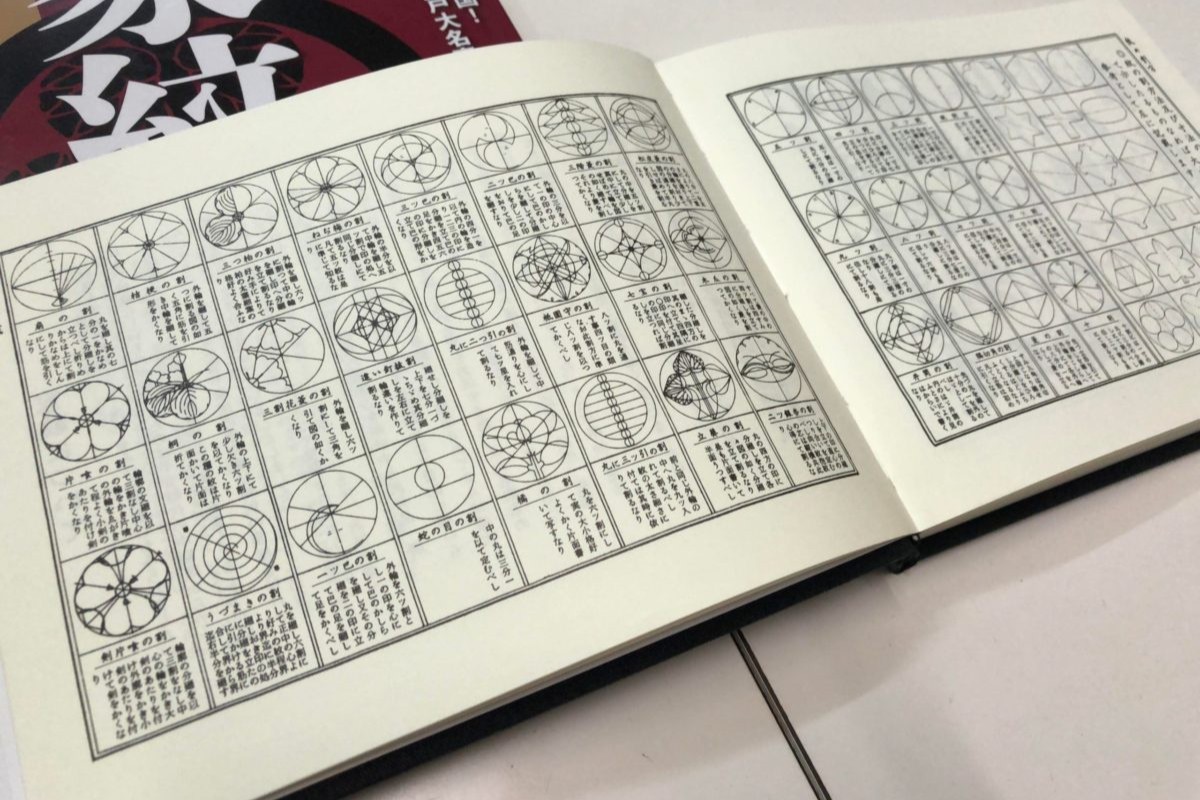
Originally, a technique called “Mon Nori Fuse” was used, but between 1830 and 1843, a Kuromontsuki dyer named Bunsuke developed the “Mon Katagami Itajime” technique, which used metal screens to create precise family crests (kamon). By the Meiji period, the method had largely evolved into the techniques used today.
【Characteristics】
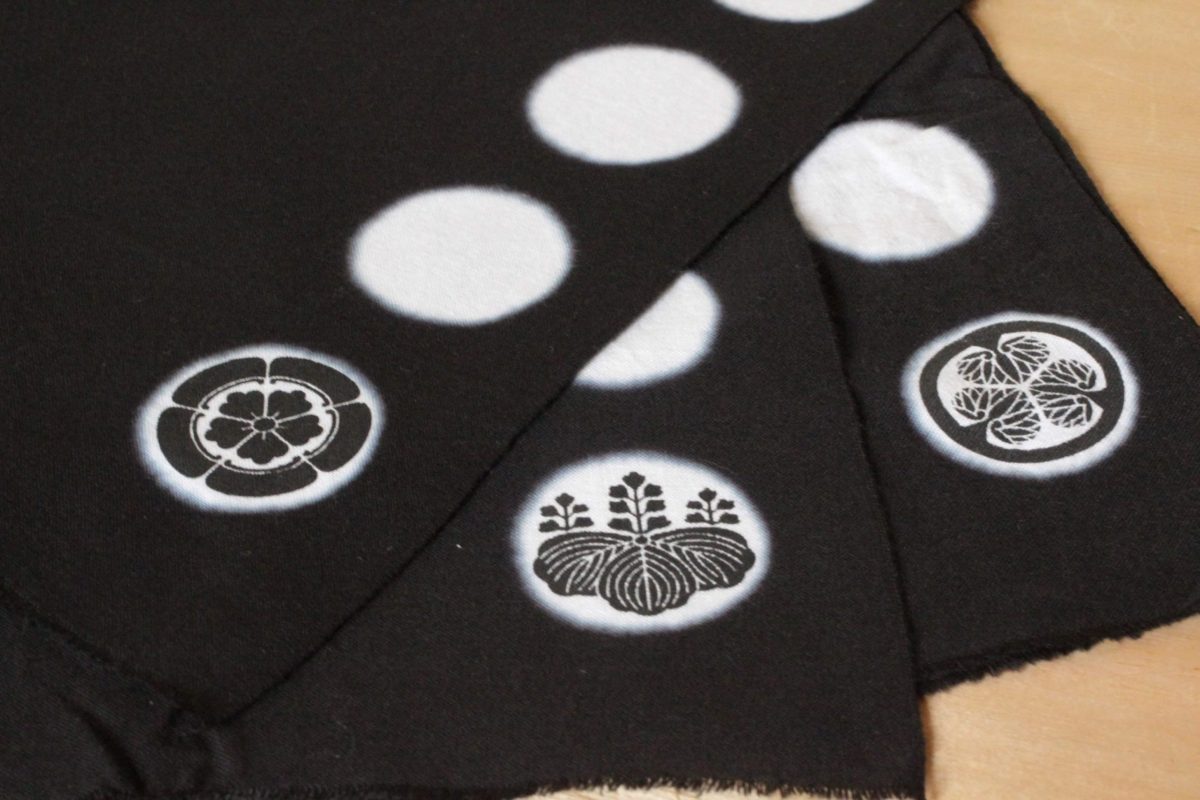
The most distinctive feature of Nagoya Kuromontsuki Zome is its deep, dignified black color. In traditional Japanese formal wear, the blacker the black, the higher the quality and value, and artisans have long pursued the ultimate black.
In particular, the black of Nagoya Kuromontsuki Zome is sometimes called “Gobai Kuro” (fivefold black). The fabric is dyed repeatedly using several times the concentration of ordinary black dye, creating a deep black with subtle shifts, appearing bluish or reddish depending on the light. Additionally, by raising the dye temperature and allowing time for absorption, a durable, long-lasting black is achieved.
Techniques for Dyeing Family Crests (Kamon)
Shinsen (浸染 / immersion dyeing): Using a stencil of the family crest, the entire fabric is immersed in dye, leaving the crest white. This produces a highly durable black.
Hikizome (引染 / brush dyeing): Dye is applied to the fabric with a brush, and paste is placed along the crest’s outline so that the crest is finished by hand in white.
The striking contrast between the deep black and the crisp white family crest symbolizes the beauty and formality of Kuromontsuki Zome.
Today, it is used in garments such as black formal kimono for weddings (kurotomesode) and mourning attire, carefully preserved as a traditional craft that continues to convey Japan’s culture of respect and etiquette.
有松鳴海絞り(ありまつなるみしぼり)
Arimatsu Narumi Shibori
Source:
https://note.com/dainagoyatours/n/n463e6ee56e13
https://store.kimono-yamato.com/Page/sanchi_arimatsu.aspx?srsltid=AfmBOorUN16MQyE1tyH1SWS9q25iZ3cYOs3MSrPNNATfbaFgIAossUWY
【History】
The origin of Arimatsu Narumi Shibori dates back to the early Edo period (around 1600). The technique of shibori itself began in the Nara period. When Nagoya Castle was being built, people from Bungo (present-day Oita Prefecture) wore shibori-dyed kimono. Inspired by this, artisans applied shibori dyeing to Mikawa cotton to make tenugui (hand towels), which is said to be the beginning of Arimatsu Narumi Shibori.
These hand-dyed textiles became extremely popular among travelers passing through Arimatsu and Narumi, post towns along the Tokaido, and quickly gained fame nationwide, eventually developing into a major production area.
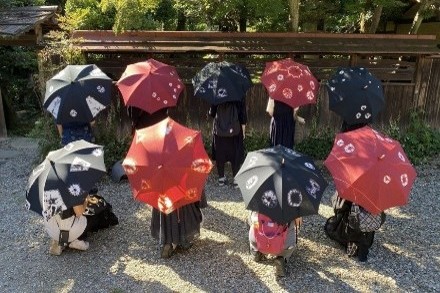
In 1975, Arimatsu Narumi Shibori was designated a national traditional craft under its current name. Today, it is commonly used for yukata and sun umbrellas.
【Characteristics】
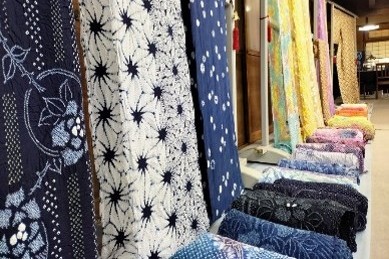
Shibori is known for its unique textures and patterns created by variations in dye saturation. The patterns are formed by how the fabric is bound, stitched, or folded during the dyeing process.
In the early Showa period (around 1920), there were approximately 100 different shibori techniques, but today about 70 techniques are still preserved. This wide variety of patterns is one of the major attractions of Arimatsu Narumi Shibori.
Some representative shibori patterns include:
Miura Shibori
Te-gumo Shibori (hand-spider shibori)
Makiage Shibori (rolled shibori)
Kanoko Shibori (fawn-spot shibori)