
AICHI’S TRADITIONAL CRAFTS
Nagoya Kuromontsuki Zome
(Traditional Black Kimono Dyeing)
Source:
https://run-up.net/past_events/14969/
https://www.pref.aichi.jp/sangyoshinko/jibasangyo/industry/nagoya-kuromontsukizome.html
【History】
The history of Nagoya Kuromontsuki Zome dates back to 1610, during the Keichō era, when the Osakai family, retainers of the Owari domain, began producing flags and banners for the domain. At the time, local dyers (konya) who produced kimono and other textiles for the Owari domain developed the dyeing techniques that would eventually become Kuromontsuki Zome.
Originally, a technique known as Mon Nori Fuse was used to create family crests on fabric. Between 1830 and 1843, a dyer named Bunsuke developed the Mon Katagami Itajime technique, which used metal stencils to produce more precise family crests (kamon). By the Meiji period (1868–1912), the craft had largely developed into the techniques used today.
【Characteristics】
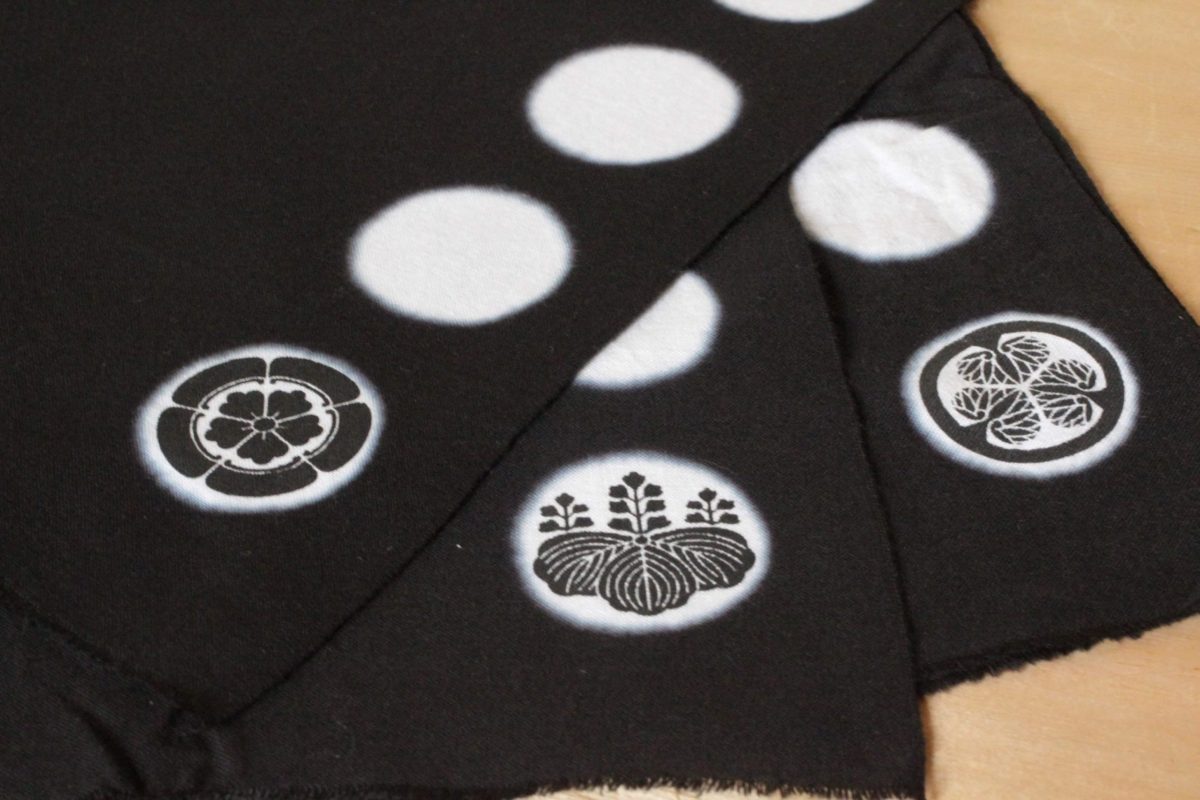
The most distinctive feature of Nagoya Kuromontsuki Zome is its deep, dignified black color. In traditional Japanese formal wear, a deeper black is considered a sign of higher quality and value, and artisans have long pursued the perfect shade of black.
The black produced by this craft is sometimes called Gobai Kuro (Fivefold Black). The fabric is dyed repeatedly using a dye concentration several times stronger than ordinary black dye, creating an exceptionally deep color with subtle bluish or reddish tones depending on the light. The dyeing process also involves carefully controlling the temperature and allowing sufficient time for the dye to penetrate the fabric, resulting in a rich, durable color.
Techniques for Dyeing Family Crests (Kamon)
Two traditional techniques are used to create the white family crests against the deep black fabric:
- Shinsen (浸染 / Immersion Dyeing): The fabric is immersed in dye using a stencil to protect the family crest, leaving the crest white. This method produces a highly durable black finish.
- Hikizome (引染 / Brush Dyeing): Dye is applied to the fabric by hand using a brush. Paste is carefully applied around the outline of the family crest to keep it white.
The striking contrast between the deep black fabric and the crisp white family crest represents the elegance and formality of Kuromontsuki Zome.
Today, this traditional craft is used in formal garments such as kurotomesode (formal black kimono worn by married women at weddings) and mourning attire. Carefully passed down through generations, Nagoya Kuromontsuki Zome continues to preserve an important part of Japanese culture, reflecting its traditions of respect and etiquette.
Arimatsu Narumi Shibori
(Traditional Japanese Tie-Dyeing)
Source:
https://note.com/dainagoyatours/n/n463e6ee56e13
https://store.kimono-yamato.com/Page/sanchi_arimatsu.aspx?srsltid=AfmBOorUN16MQyE1tyH1SWS9q25iZ3cYOs3MSrPNNATfbaFgIAossUWY
【History】
The history of Arimatsu Narumi Shibori dates back to the early Edo period (around 1600), although the art of shibori itself has existed since the Nara period (710–794). During the construction of Nagoya Castle, people from Bungo (present-day Oita Prefecture) were seen wearing shibori-dyed kimono. Inspired by these garments, local artisans began applying shibori techniques to Mikawa cotton to create tenugui (traditional Japanese hand towels). This is believed to be the beginning of Arimatsu Narumi Shibori.
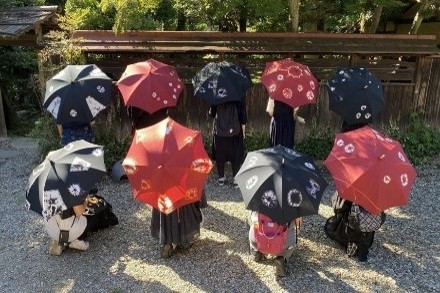
These hand-dyed textiles became popular among travelers passing through Arimatsu and Narumi, two post towns along the Tokaido Road. Their popularity spread throughout Japan, and the area gradually developed into a major center of shibori production. In 1975, Arimatsu Narumi Shibori was designated as a Traditional Craft of Japan. Today, it is commonly used to create items such as yukata and traditional sun umbrellas.
【Characteristics】
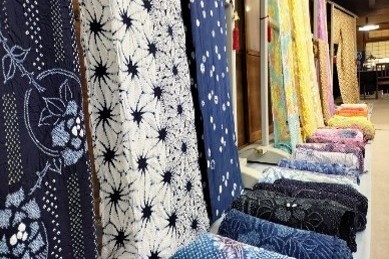
Shibori is known for its distinctive textures and patterns, created by controlling how dye reaches different parts of the fabric. These designs are formed by tying, stitching, folding, or binding the fabric before it is dyed. Each method produces its own unique pattern and texture.
In the early Showa period (around the 1920s), approximately 100 different shibori techniques were practiced. Today, around 70 techniques have been preserved, demonstrating the remarkable variety and craftsmanship of this traditional art. Some representative techniques include:
- Miura Shibori: A technique that uses threads to tie small sections of fabric, creating delicate, dotted patterns.
- Te-gumo Shibori (Hand-Spider Shibori): A technique that creates spiderweb-like patterns by gathering and binding the fabric by hand.
- Makiage Shibori (Rolled Shibori): A technique in which sections of fabric are wrapped and tightly bound before dyeing, producing distinctive patterns.
The variety of techniques and patterns is one of the greatest attractions of Arimatsu Narumi Shibori, with each piece reflecting the skill and creativity of its artisan.