Toyokuni Shrine
Deity: Toyotomi Hideyoshi
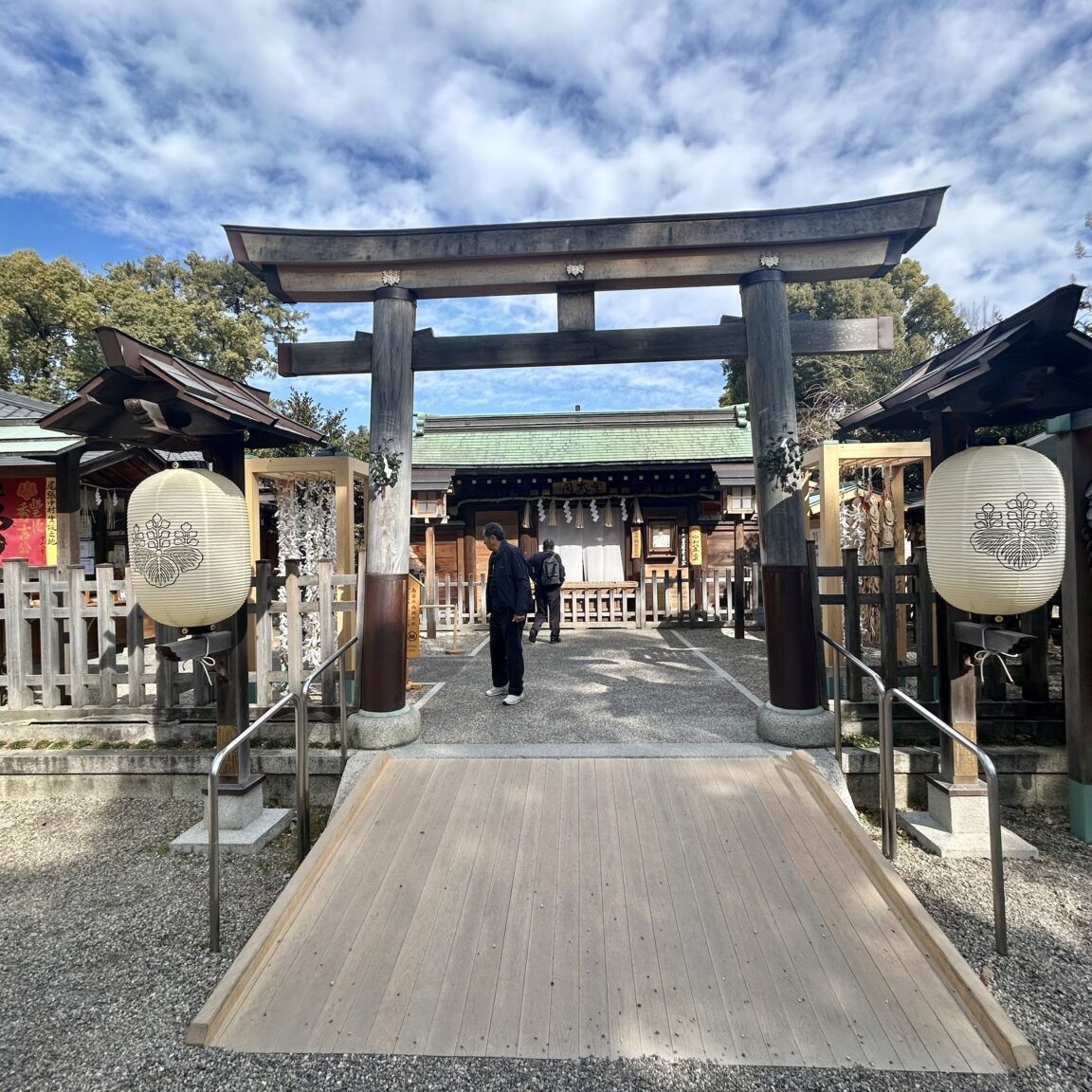
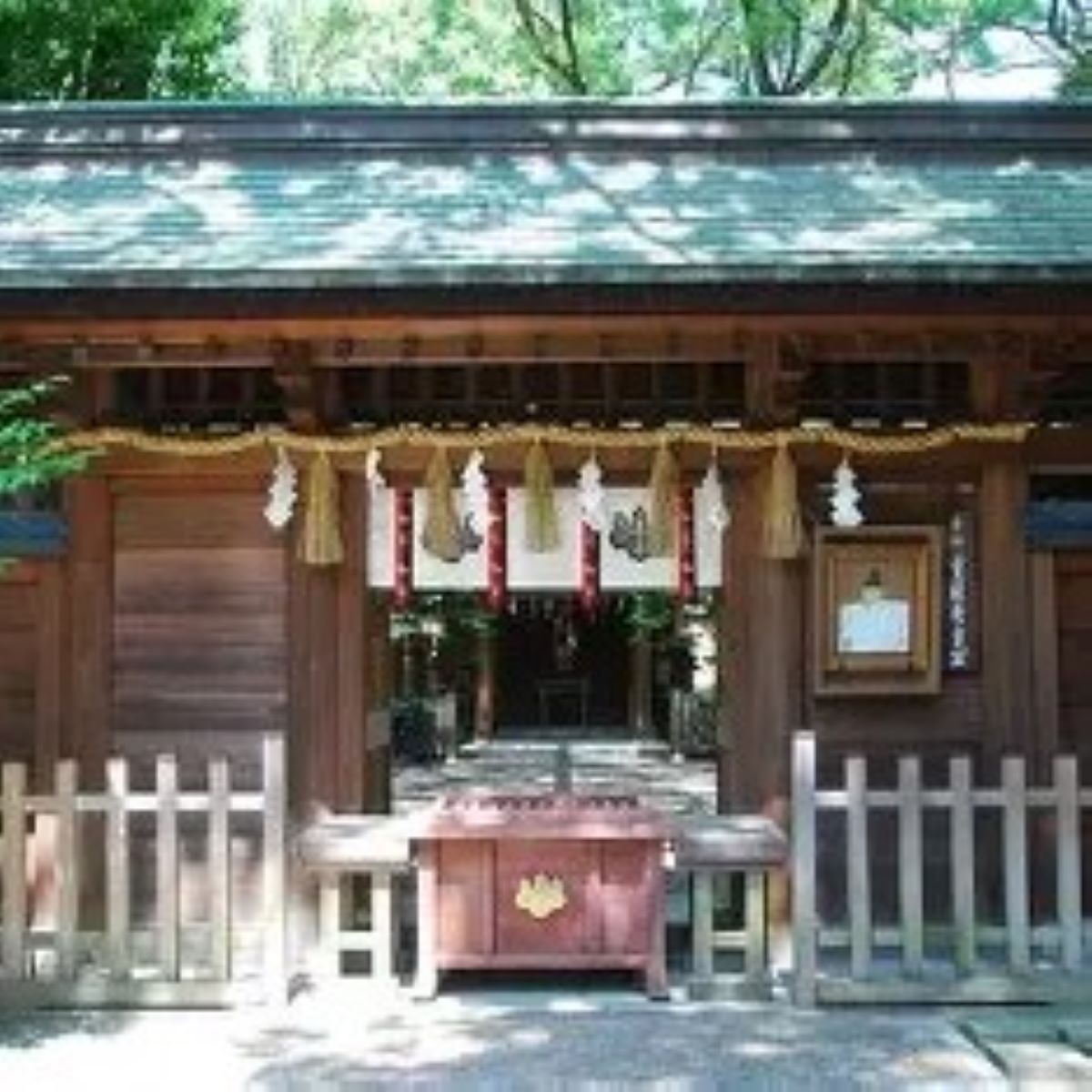
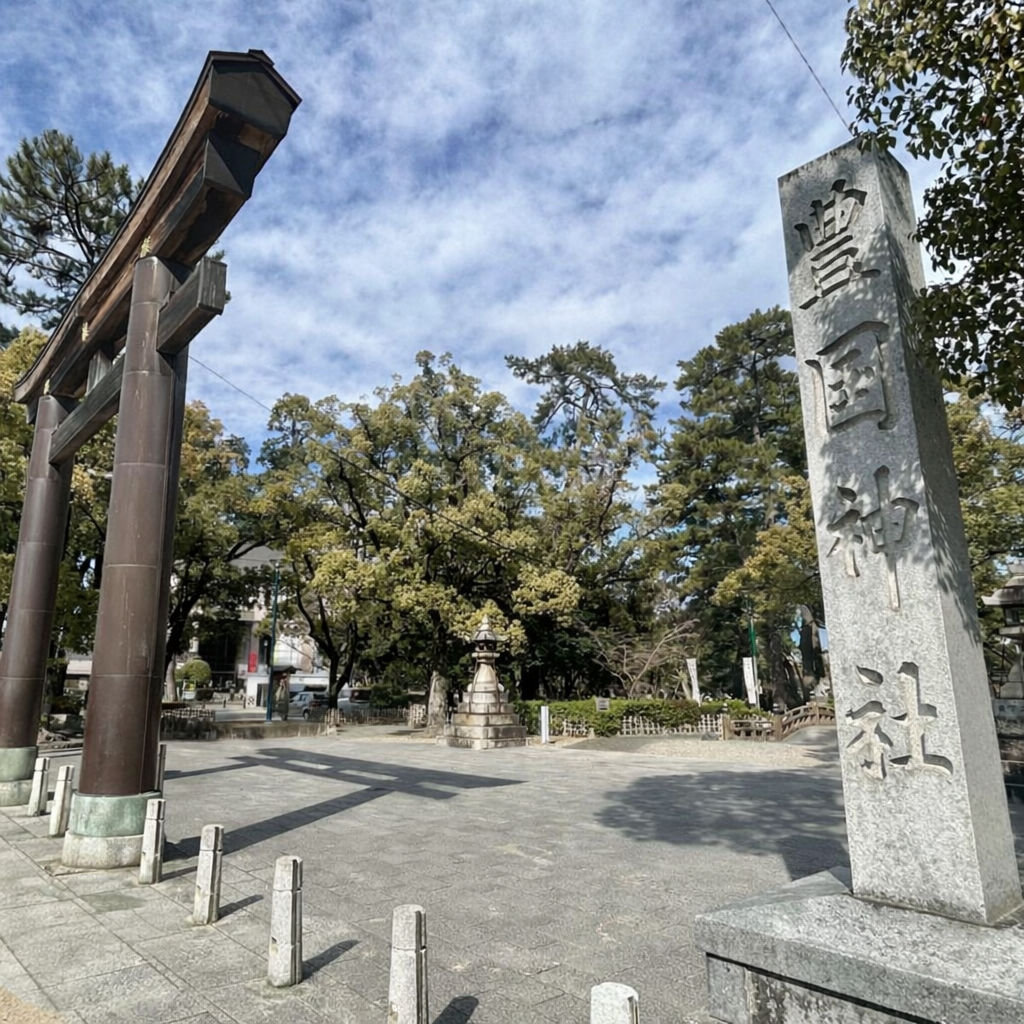
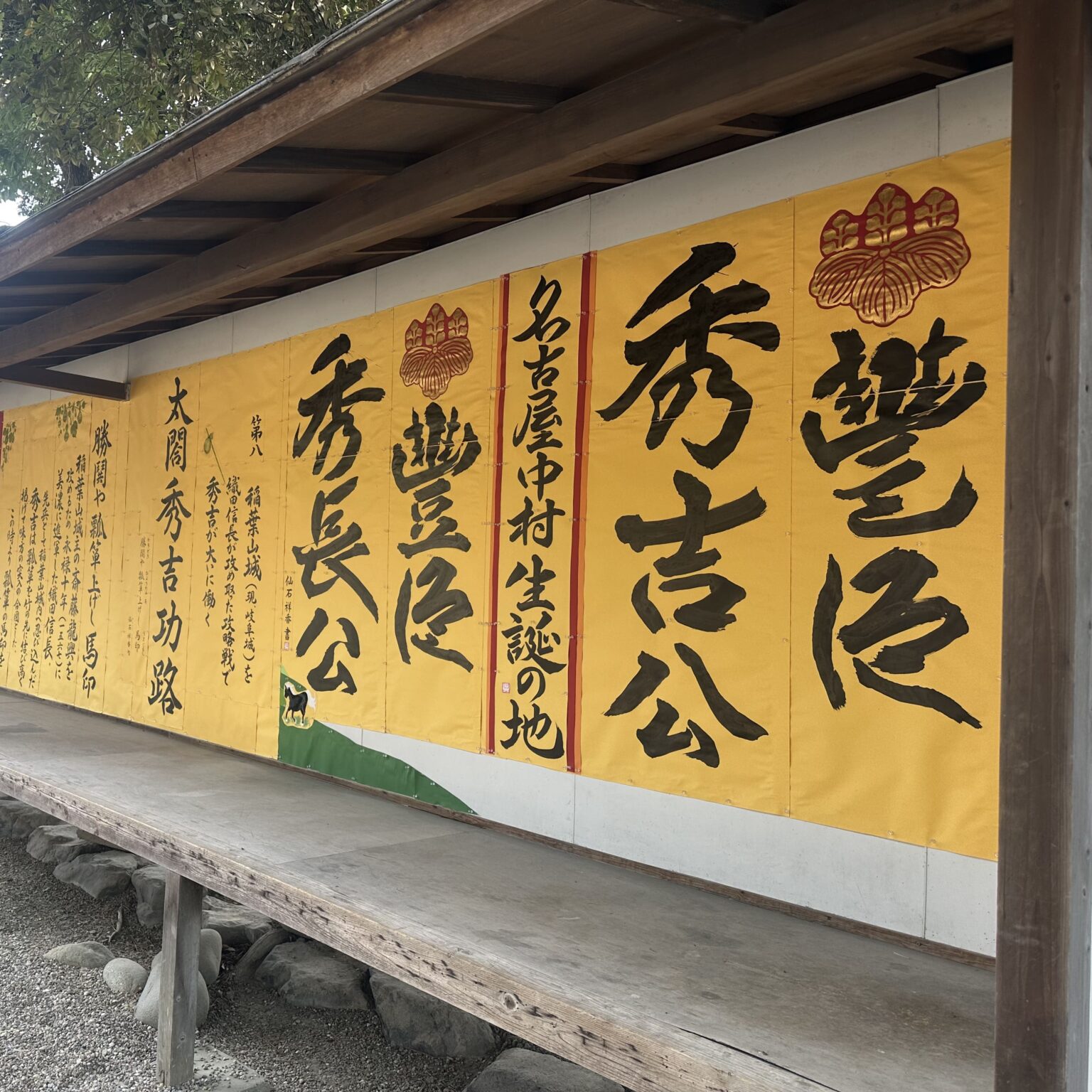
Toyokuni Shrine (豊国神社, Toyokuni-jinja) in Nagoya enshrines Toyotomi Hideyoshi and is built on the site believed to be his birthplace. While other Toyokuni Shrines exist, this one is notable for its connection to Hideyoshi.
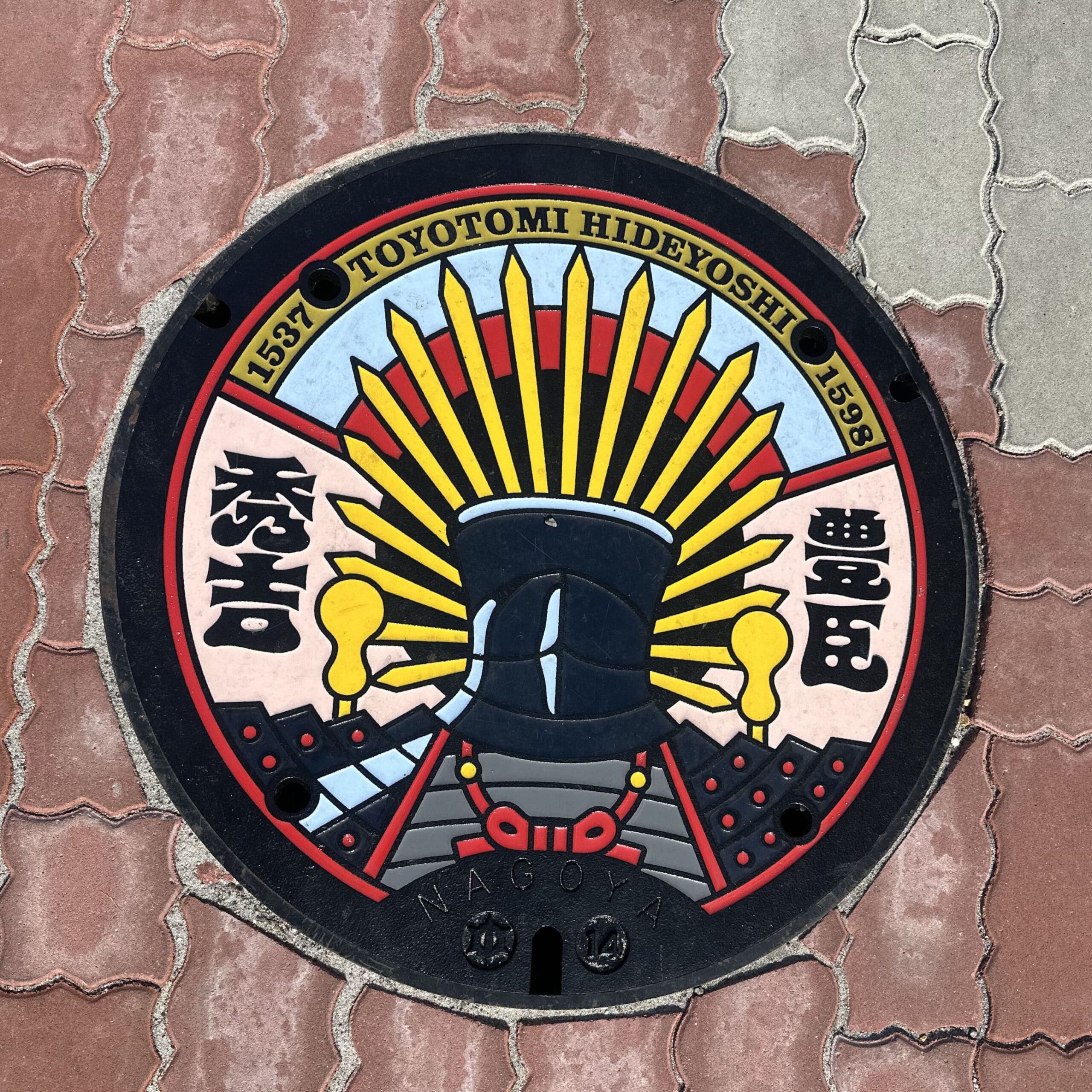
Hideyoshi, a military commander from the late Warring States and Azuchi-Momoyama periods, unified Japan as the successor to Oda Nobunaga. Born a peasant, he rose through the ranks to become the first samurai appointed to the highest imperial positions: Kampaku (Regent) and Sesshō (Chancellor).
| Address | 〒453-0053 Nakamura-cho, Nakamura Ward, Nagoya City (within Nakamura Park) |
|---|---|
| TEL | 052-411-0003 (English inquiries not accepted) |
| Business Hours | 9:30 AM to 4:30 PM (Shrine Office) ※Free access to the grounds |
| Access | Approximately 10 minutes on foot from Nakamurakoen Station on the Higashiyama Subway Line. |
History
【Shingoku・Edo Period:Deification and Suppression】
~
1868
【Meiji Period:Revival and Establishment】
【Taisho・Showa〜Present:Becoming a Regional Symbol】
Toyokuni Shrine Highlights
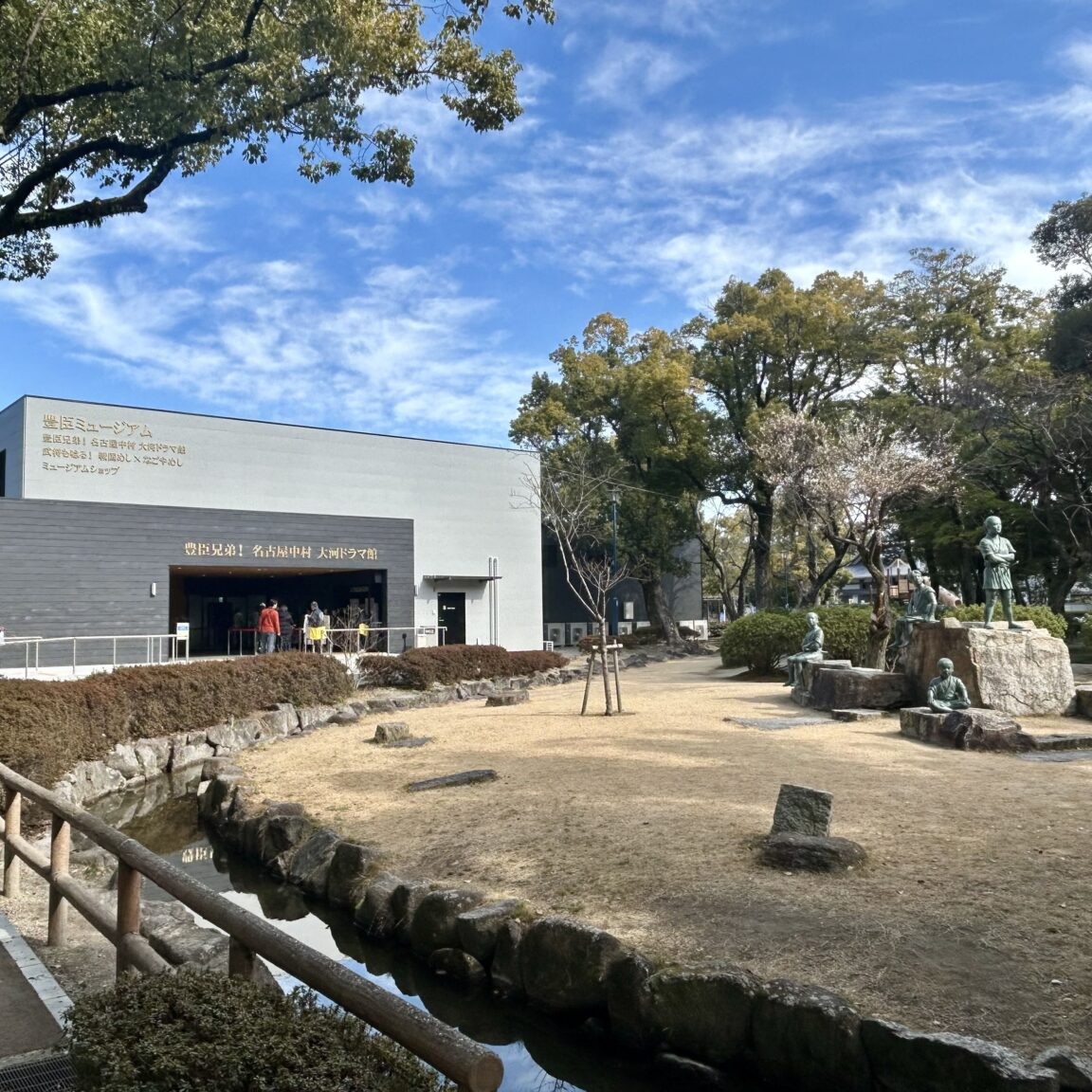
Toyotomi Museum
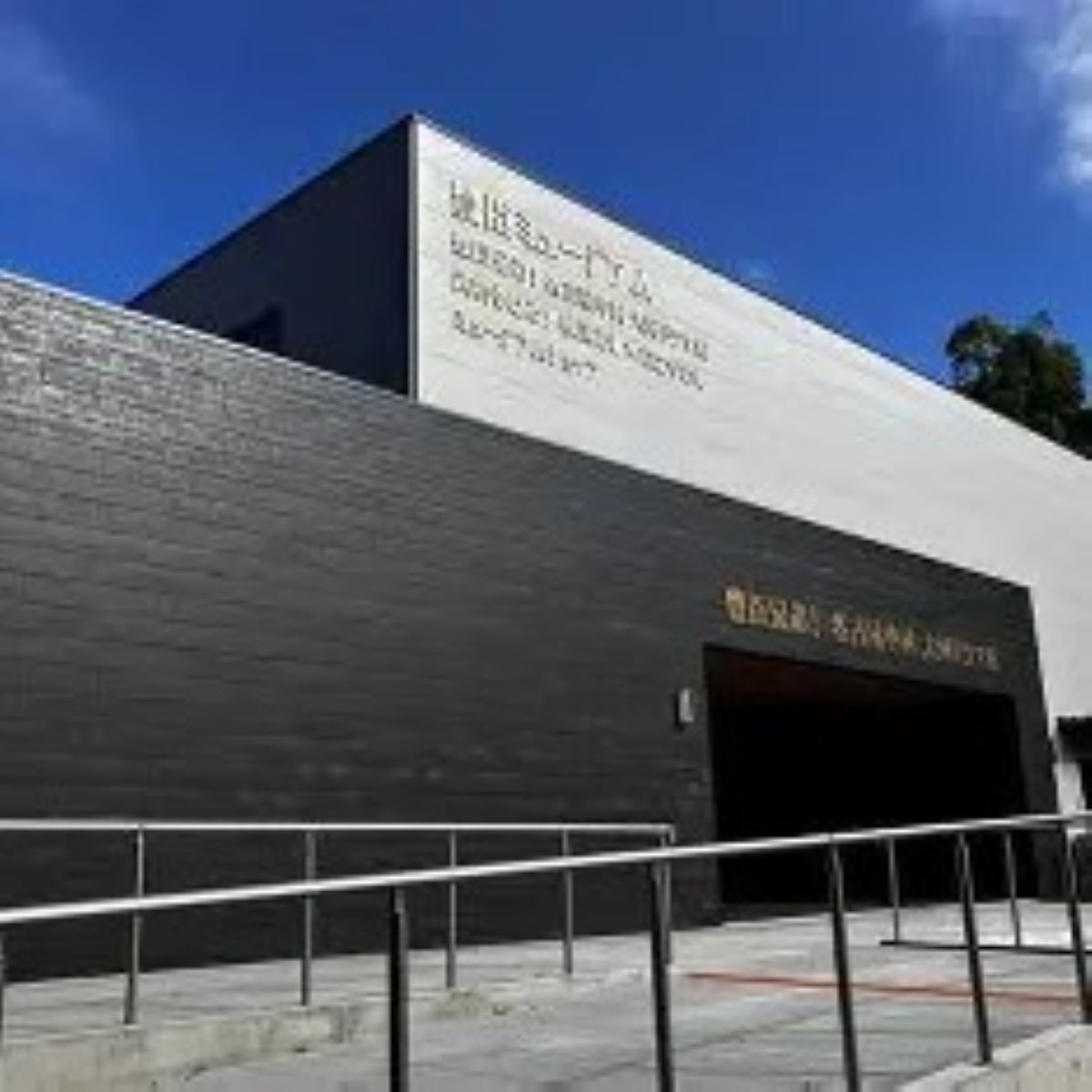
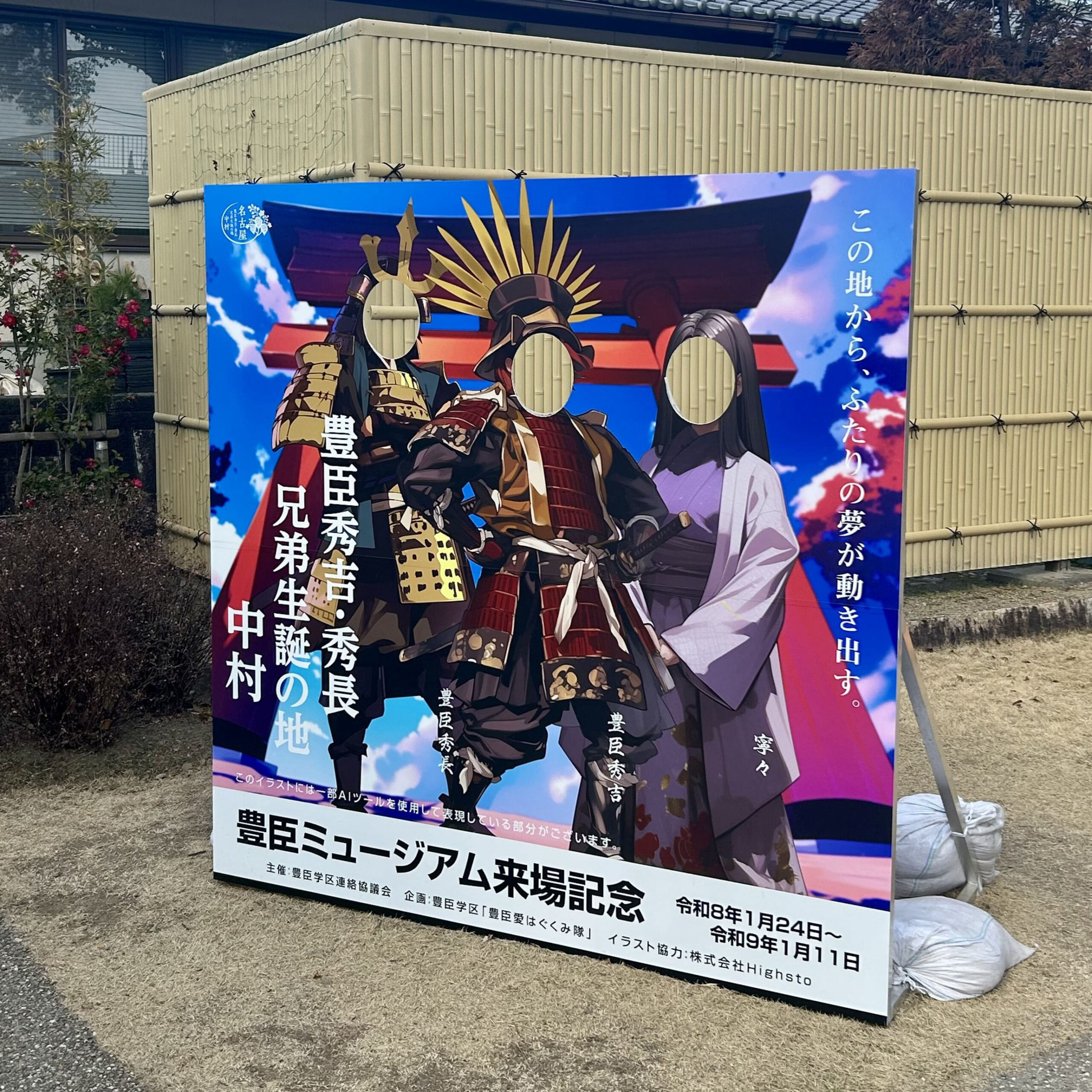
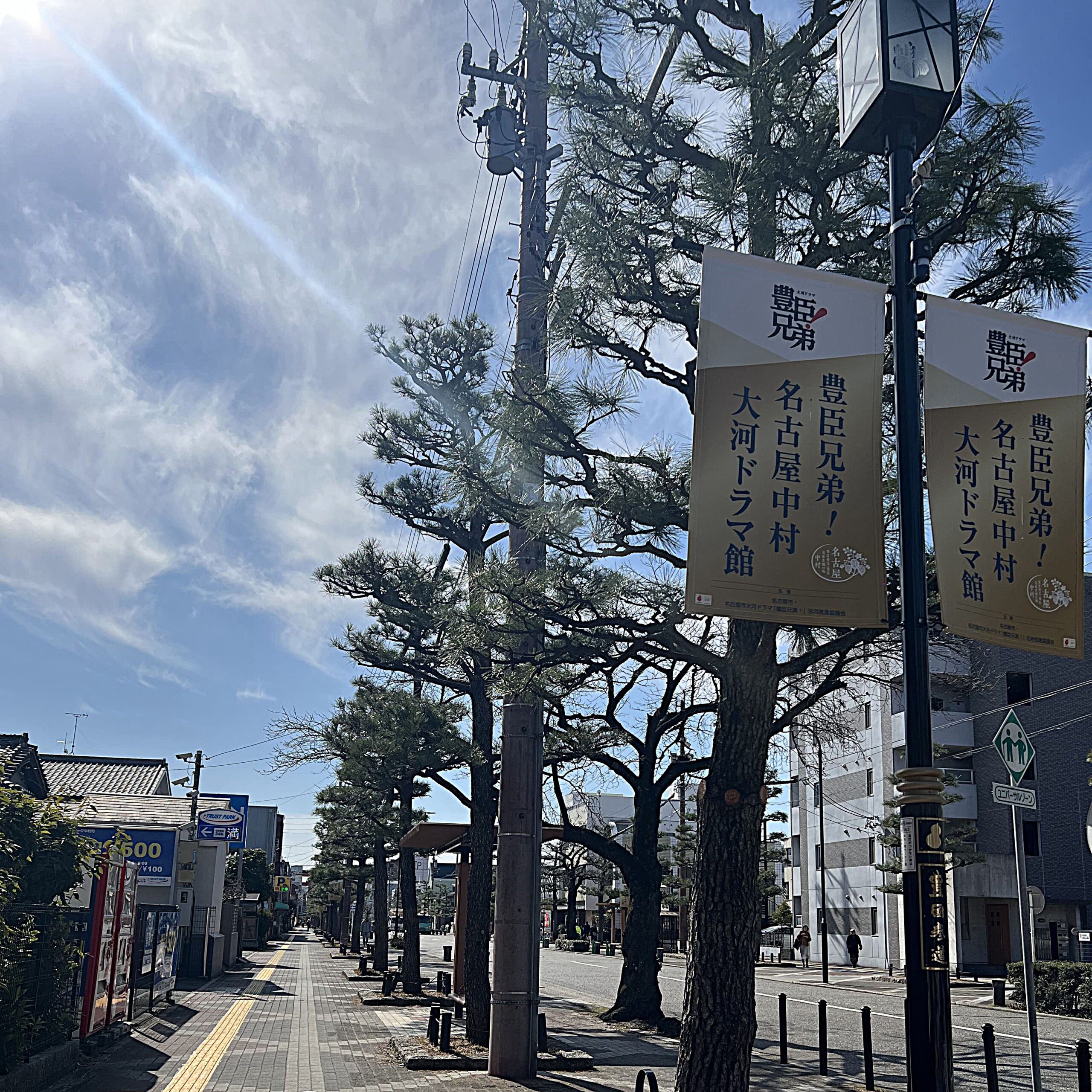
Opened on January 24, 2026, the Toyotomi Museum complex in Nakamura Park includes the “Toyotomi Brothers! Nagoya Nakamura Taiga Drama Museum,” featuring drama costumes, props, regional exhibits, and original videos.
The complex also offers a museum shop with Nagoya-exclusive souvenirs and a special exhibition, “Warriors Would Marvel! Sengoku Cuisine × Nagoya Cuisine,” highlighting local history and food culture.
Advance tickets for the paid Taiga Drama Museum area will be available from September 18, 2025 (9:30 AM) to January 23, 2026.
Paid Area (Taiga Drama Museum)
| High school & above | ¥640 (advance) / ¥800 (on the day) |
|---|---|
| Elementary/Junior high | ¥320 (advance) / ¥400 (on the day) |
| Preschooler | Free |
01
Nakamura's Giant Torii Gate
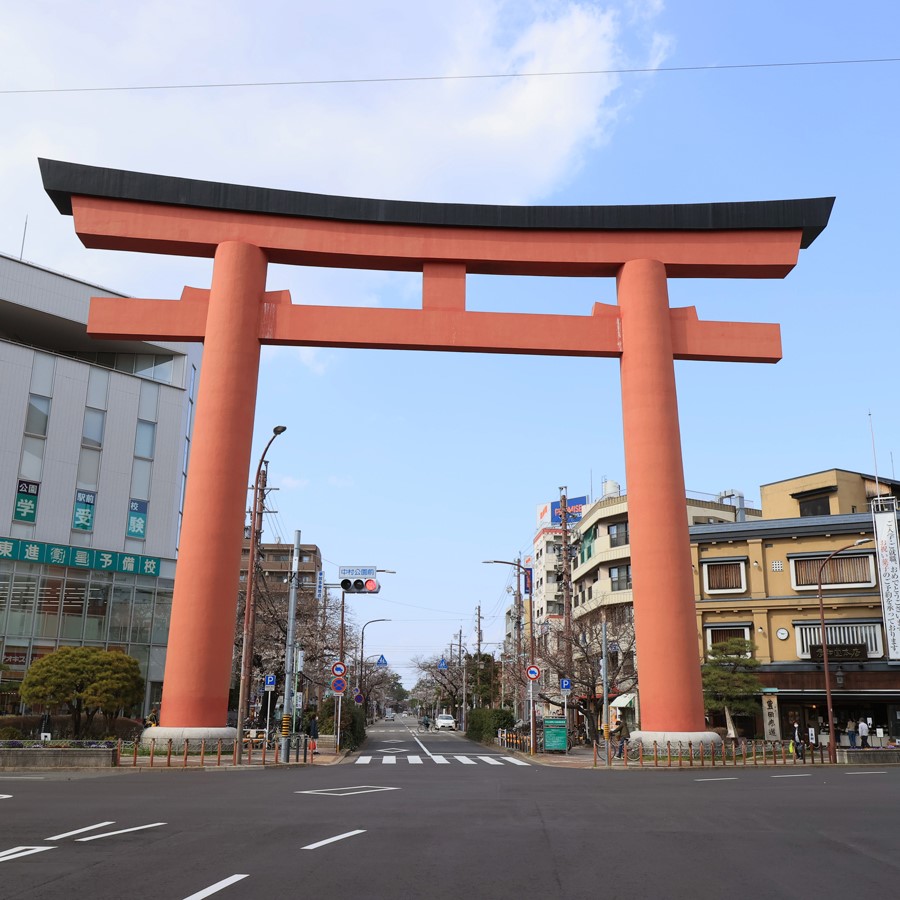
Built to commemorate the incorporation of Nakamura Ward into Nagoya City in 1921, construction began on June 17, 1929, and was completed on November 3 that year. A grand ceremony was held on January 1, 1930, featuring floats and flower trains. The reinforced concrete gate is about 24.5 meters long with pillars 2.5 meters in diameter. It was the largest of its kind in Japan at the time and has since undergone two repairs and repainting to reach its current condition.
02
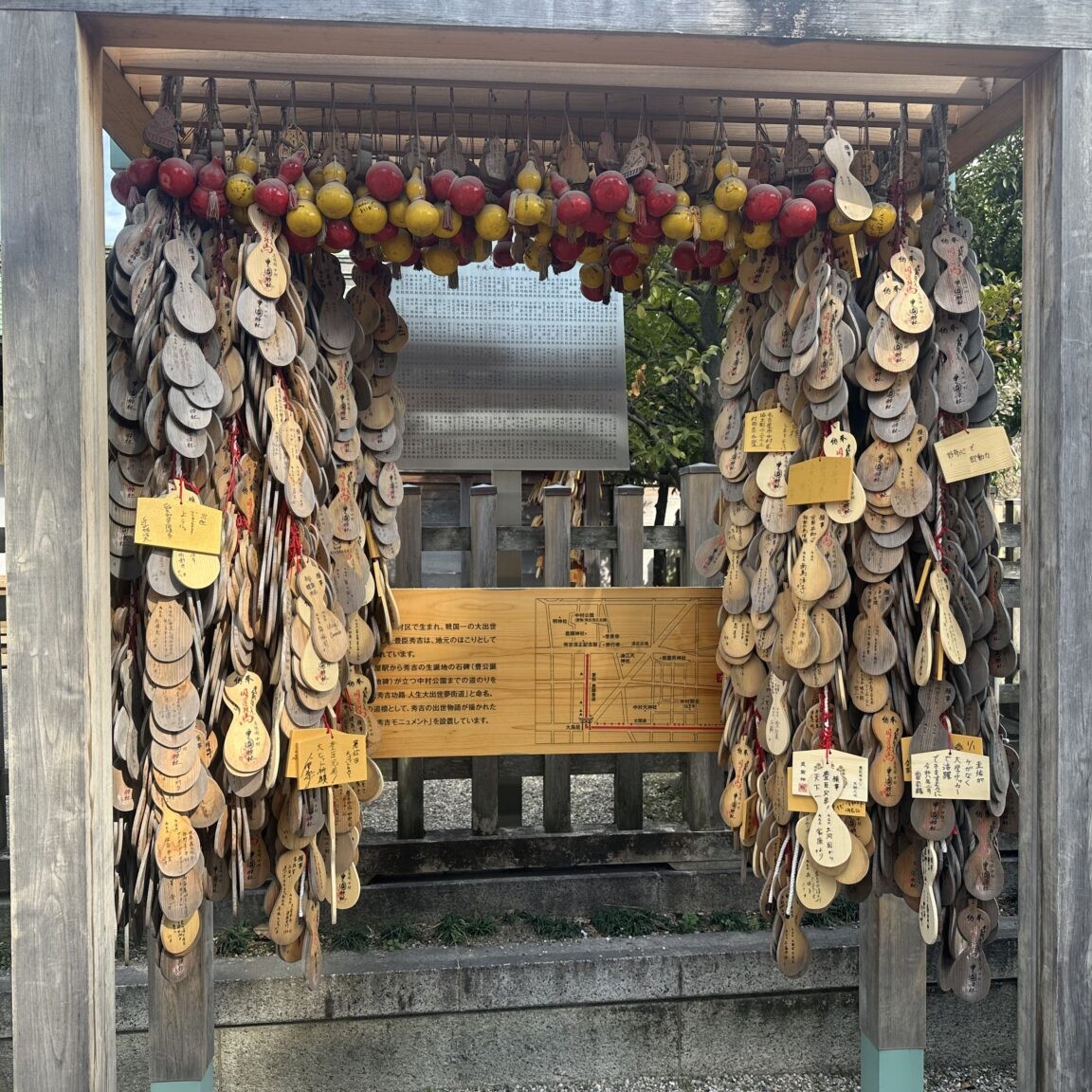
A Gourd-Shaped Votive Plaque
Within the shrine grounds, numerous votive plaques are dedicated, allowing visitors to glimpse the diverse wishes of worshipers. Each plaque holds heartfelt prayers, and simply gazing upon them warms the heart—a unique highlight of Toyokuni Shrine.
03
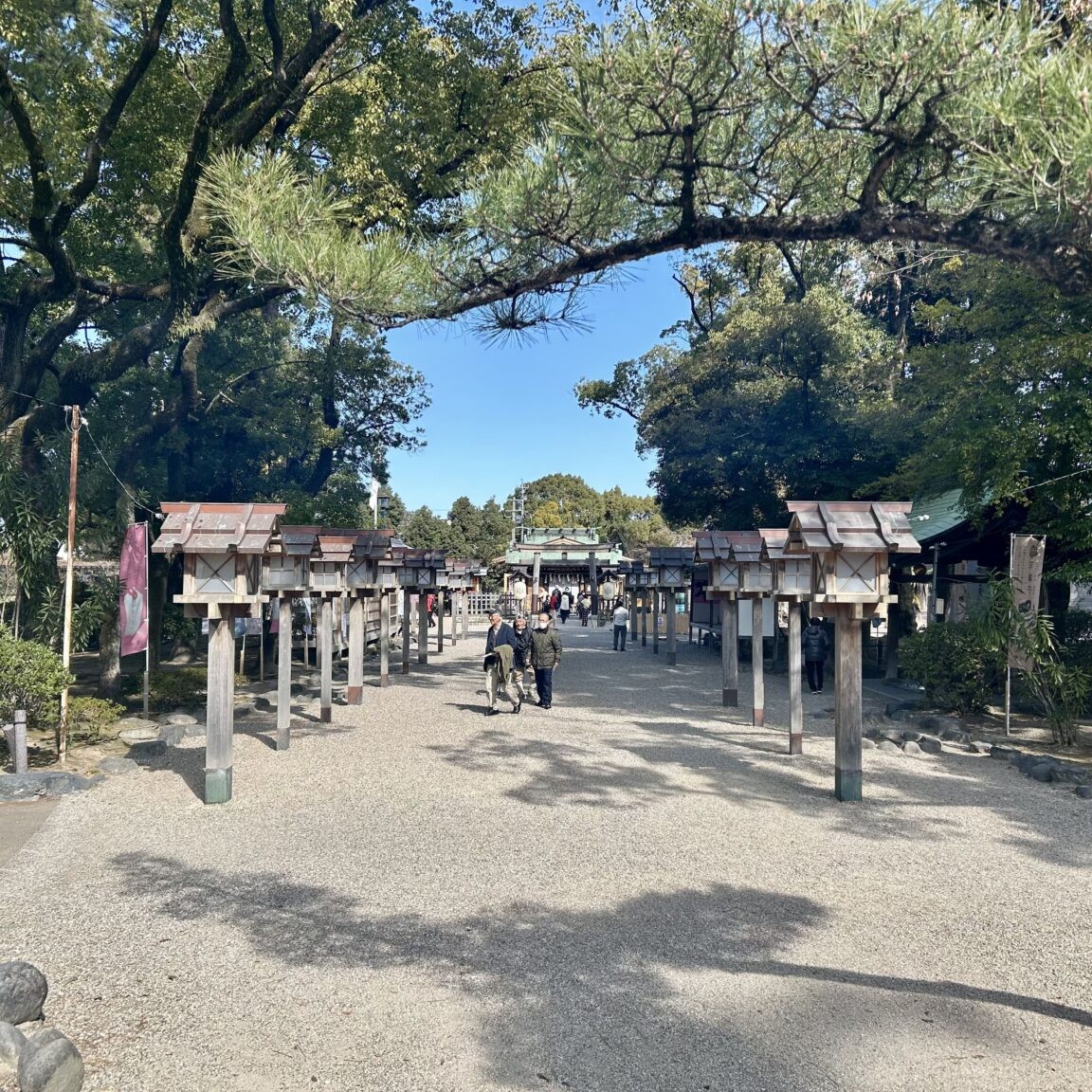
Nakamura Park
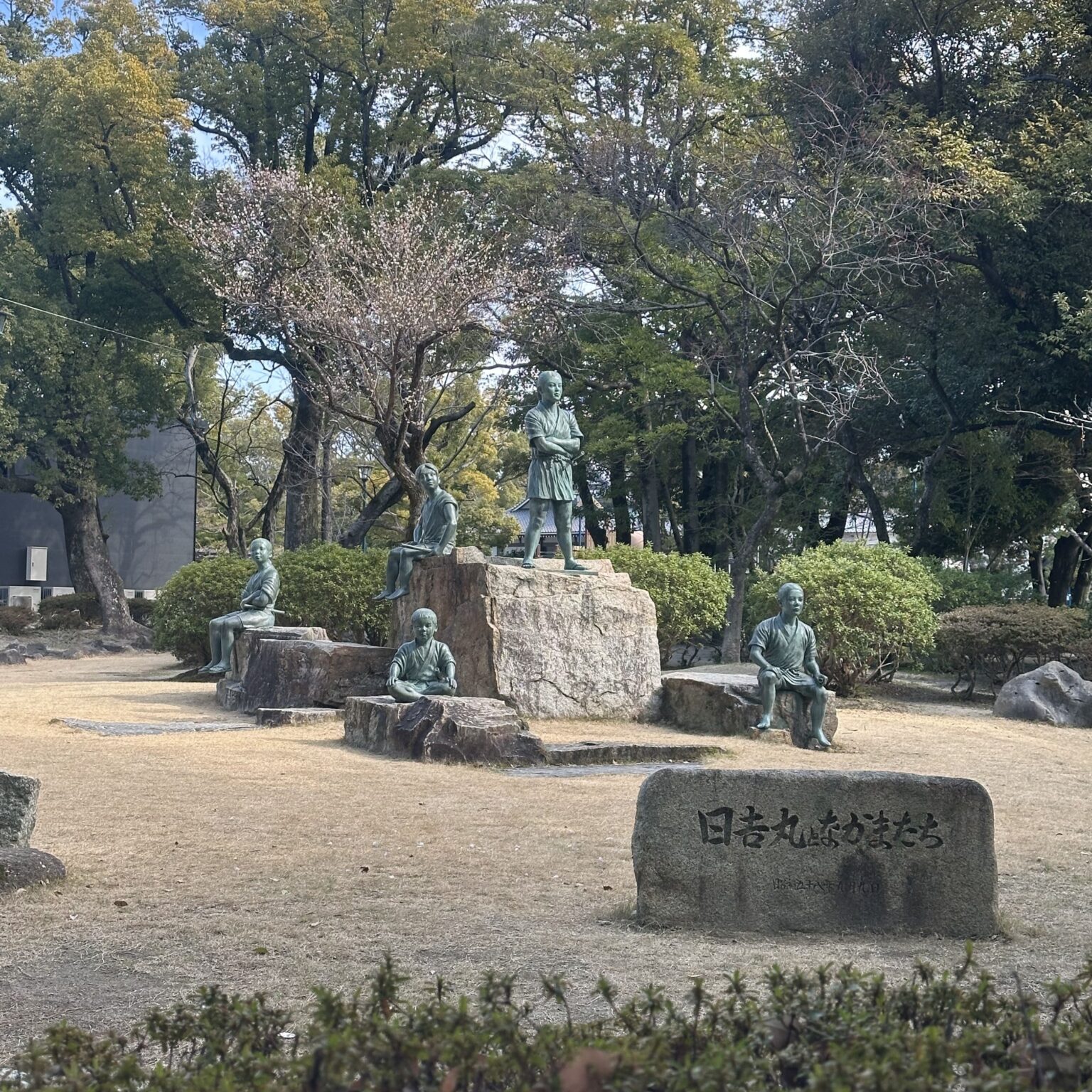
Established in February 1901, this is the city’s oldest park. The land around the shrine was donated to Aichi Prefecture by volunteers behind Toyokuni Shrine and developed by the prefecture. Highlights include a pine tree planted by Emperor Taisho as Crown Prince and a statue marking the birthplace of Nakamura Kanzaburō. It remains a relaxation spot for locals.